
Trader psychology
Check yourself before the market does.
Every trading day starts before the first trade. Score your state, write your intent, know your red flags - then see, in your own numbers, how your mindset moves your P&L.
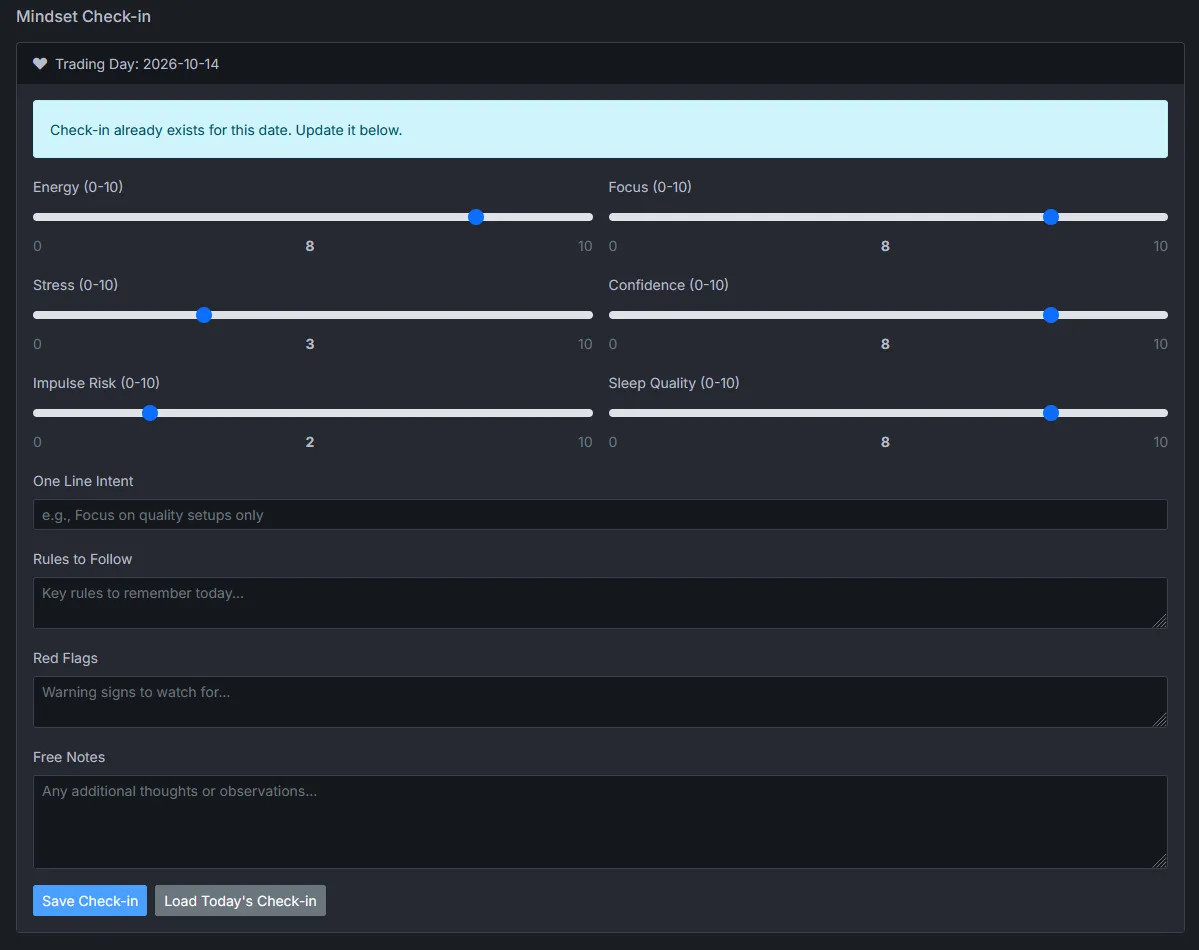
You can have a winning strategy and still lose money with it - on the days you're tired, tilted or trying to make it back.
Your setup doesn't change from one day to the next. You do. The pre-market routine makes that visible, before it shows up in your fills.
The pre-market routine
Three steps before the bell
A few minutes that decide how the rest of the session goes.
- 1
Check in
Score six things from 0 to 10: energy, focus, stress, confidence, impulse risk and sleep.
The six scores - 2
Reflect
Write a one-line intent, the rules you'll follow and the red flags that mean stop.
Self-reflection - 3
Prepare
Review the overnight session and mark your levels, so the plan exists before the open.
Chart prep
Step 1 · Check in
Six scores. An honest read on today's trader.
Rate each from 0 to 10. It takes a moment, and over time it becomes the most revealing data in your journal.
-
Energy
Higher is betterLow energy makes for slow reads and late entries.
Low day? Fewer trades, A+ setups only.
-
Focus
Higher is betterA wandering mind misses the setup - or takes the wrong one.
Scattered? Cut the watchlist to one or two names.
-
Stress
Lower is betterStress from outside the market leaks into every decision inside it.
High day? Smaller size, hard stop on the day.
-
Confidence
Watch both endsToo little and you hesitate. Too much and you size up on noise.
Premo flags it if your most confident days aren't your best ones.
-
Impulse risk
Lower is betterThe urge to chase, revenge-trade or click before the plan says so.
High day? Write the rule you will not break, and keep it in view.
-
Sleep
Higher is betterThe most underrated performance stat in trading.
Short night? Treat the open with extra caution.
Step 2 · Reflect
Decide who you'll be today - in writing.
Scores tell you where you are. Reflection decides what you'll do about it. Write it down before the open, while you're still calm - not in the middle of a drawdown.
-
One-line intent
What does a good session look like today?
- "Only trade the opening range break with confirmation."
- "Two trades max, then walk away."
-
Rules to follow
Which rules matter most today?
- "Stop goes in with the order - no exceptions."
- "No new positions after the second loss."
-
Red flags
What will tell you to stop?
- "Moving a stop "just this once"."
- "Re-entering the same move right after a stop-out."
-
Free notes
Anything else on your mind?
News you're watching, a bad night, a big day yesterday. Come back after the close and add what actually happened.
Step 3 · Prepare
Know your levels before the open
Review the overnight and pre-market session across timeframes, mark the levels that matter, and decide in advance where you'd act - and where you wouldn't.
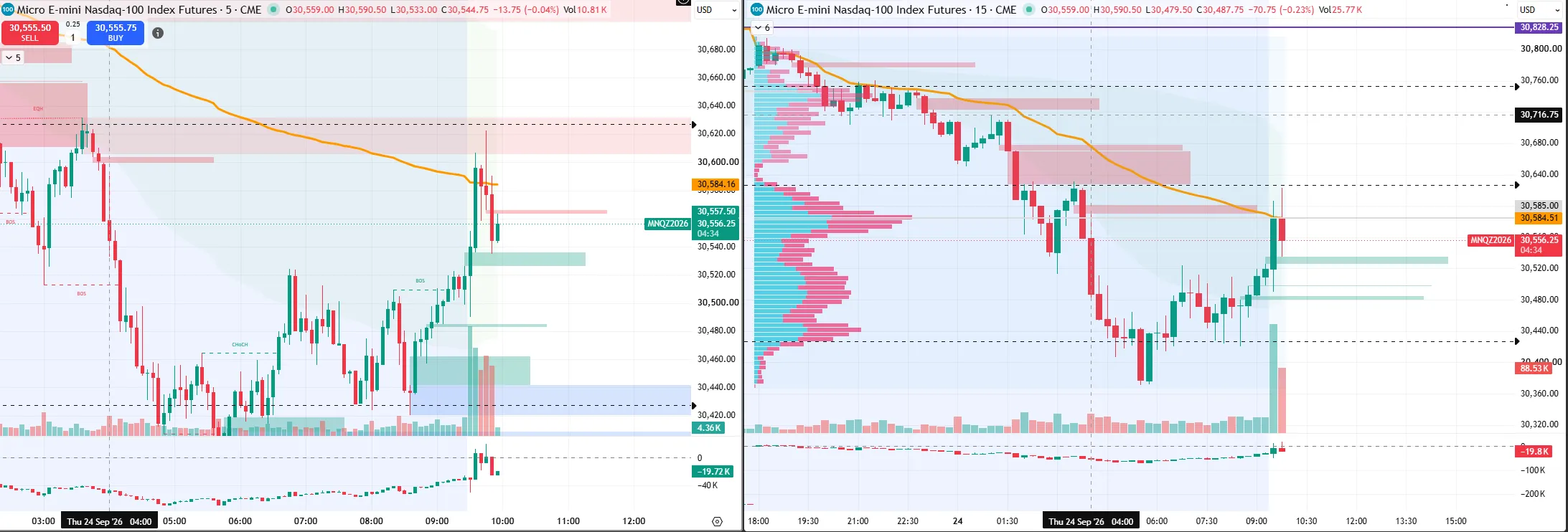
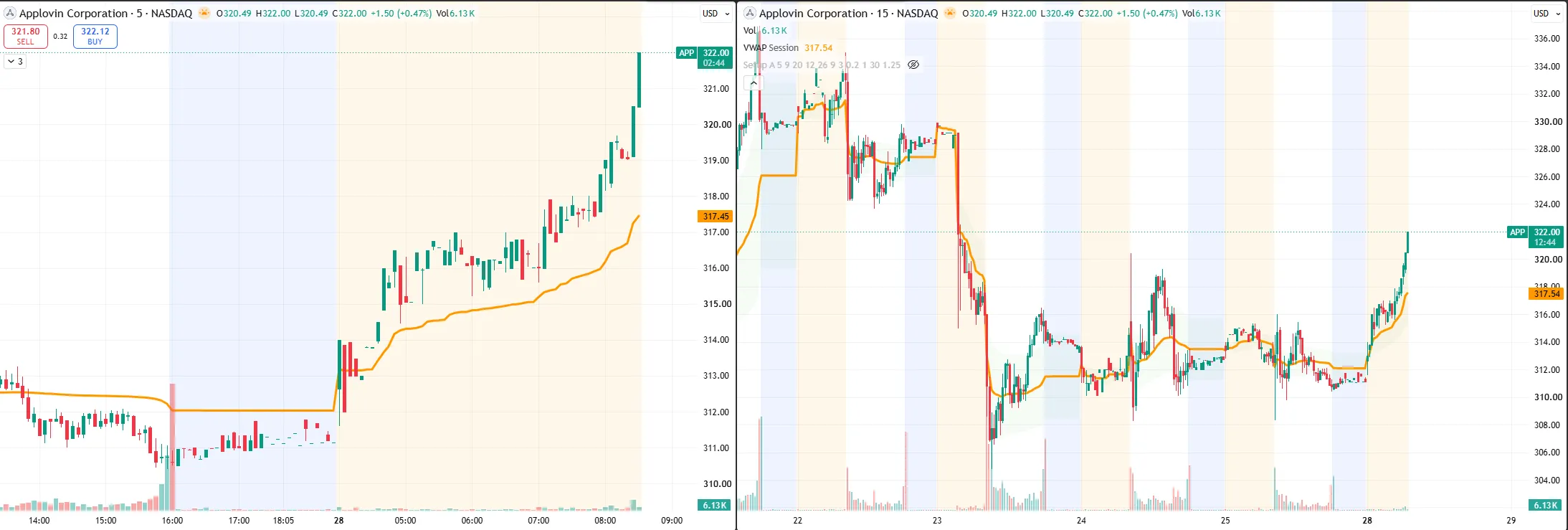
Then write the plan into your intent and rules - so the decision is made before the pressure starts.
After the close
See how your mindset moves your P&L
Psychology ↔ Performance lines up each day's check-in with that day's closed trades. For every score it measures:
- Correlation with your daily P&L and your daily win rate.
- High days vs low days - your average P&L when a score was above its usual level, against when it was below.
- Sample size - how many days each finding rests on, so you know how much to trust it.
Available on week, month and year views, across all your accounts. Full details on the Trade Journal page.
- Edge Higher sleep → higher P&L
Your well-rested days are your best days. Protect your sleep like a position.
- Risk Higher impulse risk → lower P&L
On high-impulse days, trade smaller or not at all.
- Watch Overconfidence warning
Your most confident days are not your best ones. Size by the plan, not the feeling.
Discipline, measured
Did you follow the plan?
For members, AI strategy alerts record whether you followed each one - so you can measure your discipline, not just your P&L.
FAQ
Psychology questions
How long does the check-in take?
About as long as it takes to move six sliders and write a sentence or two. The written fields are optional - the scores are what powers the analysis.
Can I change a check-in after saving it?
Yes. There is one check-in per trading day. Open it again and you can update it - for example to add notes after the close.
When do the insights start to appear?
Once you have check-ins and closed trades on the same days. They start with very few days and say so - each insight shows how many days it is based on, and becomes more reliable as that number grows.
Who can see my check-ins?
Only you. Your check-ins are part of your private journal and are never shared or used for anything other than showing your own results back to you.
Is this therapy or medical advice?
No. It is a self-reported journal that helps you notice patterns in your own trading. If stress or sleep are a real problem, talk to a professional.